
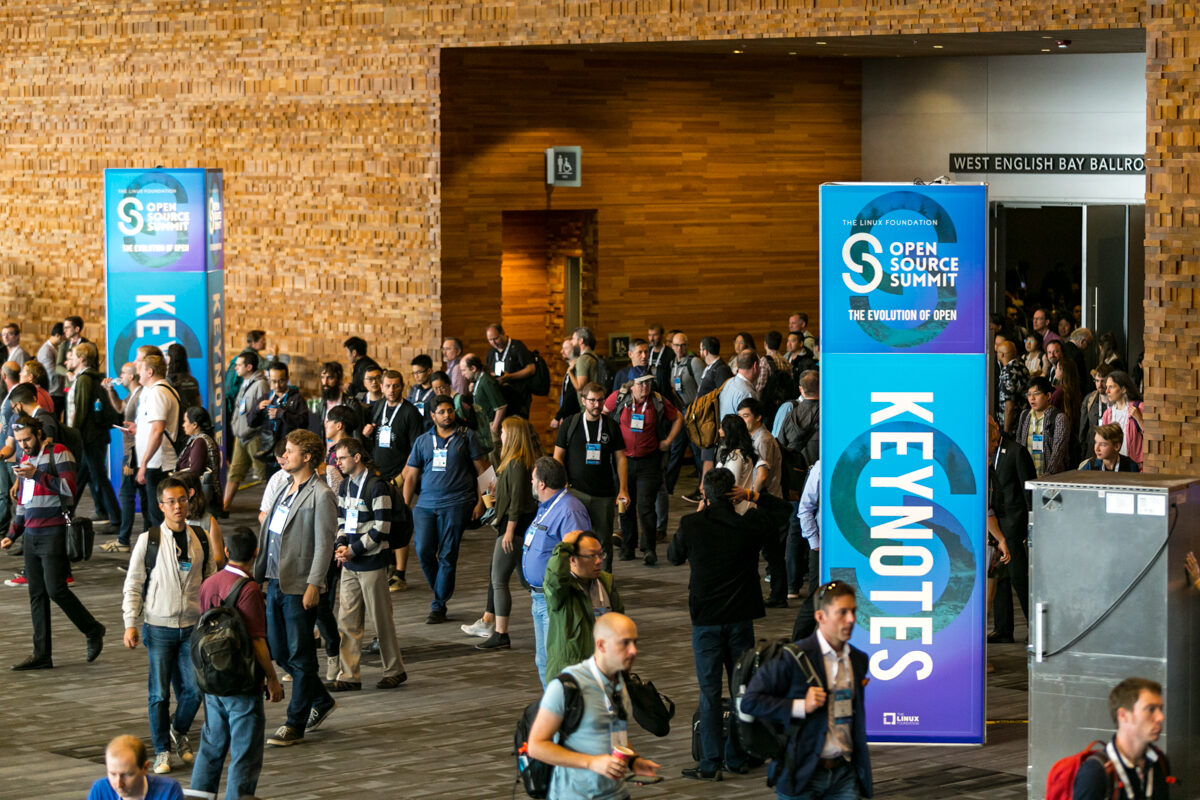
The Zephyr Project, the open-source RTOS hosted at the Linux Foundation, has named the winners of its 10th Anniversary Community Awards. The awards were presented at the Zephyr Developer Summit in Prague, held October 7–9, 2026, and the project listed every winner in a post published on October 15, 2026. Winners were chosen from dozens of nominations across six categories. Three people share the top honour, the Distinguished Achievement Award: Anas Nashif of Intel, Maureen Helm of Analog Devices and David Leach, formerly of NXP.
The awards recognise individual contributors, not products or companies. The list does show which people and employers maintain the parts of Zephyr that makers use, including the CAN and Bluetooth LE Audio stacks.
The winners
| Award | Winner | Affiliation | Cited contribution |
|---|---|---|---|
| Distinguished Achievement | Anas Nashif | Intel | Project founder; more than 2,500 commits to the main branch since 2016 |
| Distinguished Achievement | Maureen Helm | Analog Devices (formerly NXP) | Former TSC Chair; maintainer of ADI platforms |
| Distinguished Achievement | David Leach | Formerly NXP | Served on the TSC and Governing Board |
| Technical Visionary (TSC Honor) | Carles Cufí | Nordic Semiconductor | Chair of the Architecture Working Group |
| Top Committer | Jordan Yates | Embeint | More than 500 merged PRs and over 1,000 commits since 2020 |
| Workhorse | Henrik Brix Andersen | Vestas | CAN subsystem maintainer; elected TSC member |
| Documentarian | Emil Gydesen | Antero ApS | Has worked on LE Audio since 2018. The subsystem now exceeds 130,000 lines of code |
| Ecosystem Amplifier | Fabio Baltieri | Zephyr Podcast co-host |
Nashif is one of the project's founders, and the announcement says: "It is hard to imagine Zephyr without Anas." Beyond his commit count, the project calls him the largest contributor to Zephyr's documentation in its history. Helm's citation credits her with helping establish the vendor-HAL model while at NXP and notes her earlier term as chair of the project's TSC. Leach, also formerly of NXP, served on both the Technical Steering Committee and the Governing Board, and the citation highlights his mentoring of newer contributors.
The other five awards go to people who work on specific parts of the project. Cufí, of Nordic Semiconductor, received the TSC Honor as chair of the Architecture Working Group. Yates, of Embeint, won Top Committer for work spanning power management, wireless networking, sensors, LTE modem drivers and tooling such as Kconfig and Twister; he also maintains LoRa/LoRaWAN support. Brix Andersen, of Vestas, won Workhorse for issue triage and helping contributors, alongside maintaining the CAN subsystem. Gydesen, of Antero ApS, won Documentarian for his LE Audio work, which he delivered with implementation, documentation, samples and tests. Baltieri, of Google, won Ecosystem Amplifier for his outreach work, including co-hosting the Zephyr Podcast with Benjamin Cabé, and for proposing the PR dashboard.
How the awards were run
The project introduced the Community Awards on July 28, 2026 as part of its tenth-anniversary celebrations. The rules:
- Six categories: Distinguished Achievement, Top Committer, Documentarian, Workhorse, Ecosystem Amplifier and Technical Visionary (TSC Honor).
- Only individuals could be nominated. Current Zephyr staff were ineligible.
- Each nomination needed a 150–500 word statement and 5–8 supporting links.
The schedule ran as follows:
- July 27, 2026: nominations opened.
- September 1, 2026: nominations closed and committee review began.
- September 11, 2026: committee review ended.
- October 7–9, 2026: awards presented at the Zephyr Developer Summit in Prague.
- October 15, 2026: the project published the full list of winners and citations.
Ten years of Zephyr
The project marked its anniversary earlier in the year with a March 4, 2026 announcement. In it, the project said Zephyr supports more than 1,000 boards across multiple architectures and has grown from roughly 100 contributors at launch to more than 3,000. The same release cited survey results from Linux Foundation Research:
- 70% of surveyed organisations in the United States and Canada, and 62% in Europe, report already using Zephyr in commercial products.
- 69% plan to increase or significantly increase adoption over the next year.
- 52% report supporting Zephyr-based products for five to ten years or longer.
These are figures reported by surveyed organisations, not measured installation counts. In the same release, Kate Stewart, Zephyr Project Director, said: "Today, Zephyr stands as a mature and trusted RTOS, embedded in products designed to last and be supported for years and in many cases, decades."
The award winners work at chip vendors (Intel, Analog Devices, Nordic Semiconductor, and formerly NXP), at Google, and at companies such as Vestas, Embeint and Antero ApS.
What It Means for Makers
The awards have no direct effect on your projects. They do put names to the people who maintain the code many hobby and commercial designs depend on.
- CAN projects: Henrik Brix Andersen is the CAN subsystem maintainer, so his name is the one you will see on reviews in that part of the tree.
- Bluetooth LE Audio: Emil Gydesen chairs a weekly meeting for LE Audio contributors and answers questions on the project's Discord.
- LoRa/LoRaWAN: Jordan Yates maintains Zephyr's LoRa/LoRaWAN support.
- Keeping up with the project: the Zephyr Podcast is one way to follow development without reading every pull request, and the PR dashboard shows contributors their assigned pull requests and pending reviews.
Board support, documentation and community resources are on zephyrproject.org. Check that your target board is on the supported-boards list before you pick Zephyr for a new design. Nominations for these anniversary awards closed on September 1, 2026.
Sources
- Celebrating the People Behind Zephyr: The 2026 10th Anniversary Community Award Winners — Zephyr Project, October 15, 2026
- Introducing the Zephyr Community Awards: Celebrating 10 Years of Contribution — Zephyr Project, July 28, 2026
- Zephyr Turns 10 as Global Adoption Surges and Long-Term Embedded Use Expands — Zephyr Project, March 4, 2026
