
Texas Instruments and the Zephyr Project made two linked announcements on 1 October 2026. The Zephyr Project said Infineon Technologies and Texas Instruments had upgraded to Platinum membership, which it said provides additional resources for Zephyr’s technical development, infrastructure and community programs. On the same day, TI announced that “its broad embedded portfolio is now supported on the Zephyr Project,” covering its microcontrollers (MCUs), microprocessors (MPUs) and wireless connectivity devices. Neither announcement mentions a price or a licence fee.
Both announcements came out ahead of the Zephyr Maintainers Forum (6 October) and the Zephyr Developer Summit (7–9 October) in Prague, with the summit co-located with Open Source Summit Europe. The Zephyr Project said the community would mark Zephyr’s 10th anniversary there with more than 40 technical sessions, over 45 speakers and the first-ever Zephyr Community Awards, held on 7 October. Both events have now taken place.
What TI says is covered
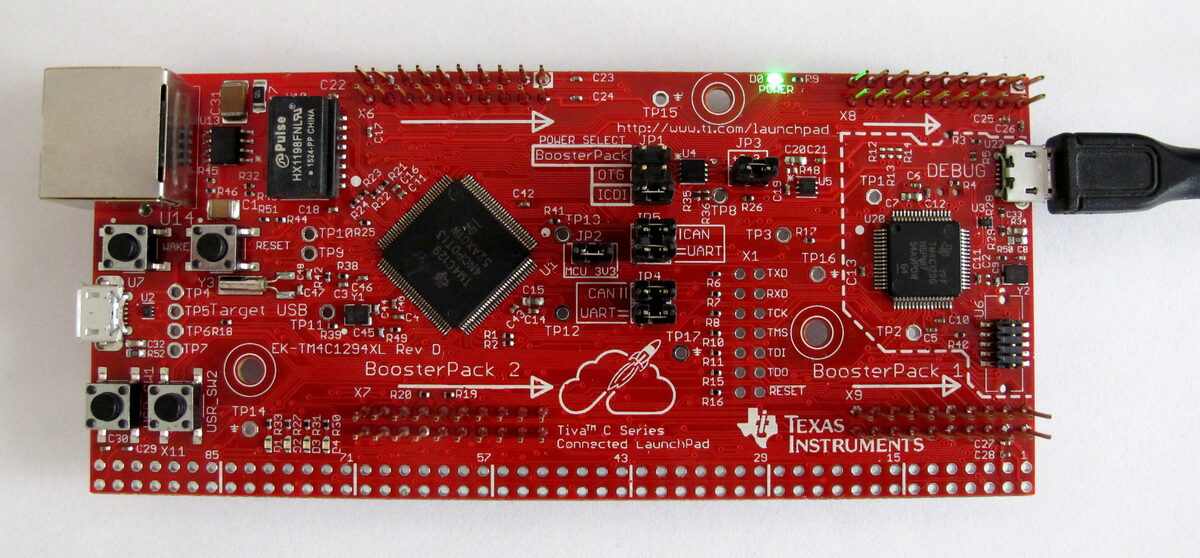
TI’s release does not include a device-by-device list. It describes the scope by product category, and its FAQ says the ecosystem includes “MCUs ranging from ultra-low-power Arm-Cortex M0 devices to high-performance Arm-Cortex M33 cores, MPUs and wireless connectivity devices.” TI’s Zephyr RTOS design resources page groups supported devices into four categories:
- General-purpose MCUs
- Wireless connectivity
- Real-time MCUs
- Microprocessors
Each category links to TI’s product finder with a Zephyr RTOS filter applied, which is the way to check whether a particular part is covered.
TI describes the result as a “unified, production-ready development experience” and says developers can move to TI chips while keeping “existing Zephyr codebases and toolchains intact.” Kate Stewart, Vice President of Dependable Embedded Systems at the Linux Foundation, said in TI’s release: “Developers can design across TI's MCUs, MPUs and wireless devices on a common, upstream-first platform, backed by a community that takes security and long-term maintenance seriously.”
Upstream first, with a TI-validated fork alongside
TI says it works upstream first. In the release’s words, “The Zephyr community vets TI’s code before any SDK release,” which TI says gives developers a codebase that won’t change during product ramp-up. TI says it runs CI/CD on public GitHub pages, giving early access to resources and new features before they reach the final SDK. It also says it regularly updates its Zephyr-based SDKs to address security vulnerabilities, and it points to TI silicon supporting life cycles of more than 10 years.
TI also keeps a second channel. Its design resources page offers the official Zephyr repository alongside a “TI validated Zephyr repository.” TI says these downstream repositories are forked from the official one, “providing you with pre-validated software and early access to the latest TI board features before they are merged into the upstream repository.” TI describes the official repository as offering “a stable implementation that aligns with community standards.”
The Cyber Resilience Act
TI presents the move partly as a way to help customers comply with the EU Cyber Resilience Act (CRA). The release’s FAQ states that “TI’s Zephyr platform is CRA-compliant” and says this reduces compliance burdens for developers targeting EU markets. The release does not break down which CRA requirements the platform covers.
The membership upgrade
The Zephyr Project’s announcement says TI has contributed to Zephyr since the project began in 2016, providing software and board support. It describes Infineon as an active contributor that supports Zephyr across multiple embedded platforms. TI’s design resources page now cites its “Platinum-level membership” in the Zephyr Foundation.
Stewart also commented in the Zephyr announcement: “Seeing two major semiconductor companies that have contributed to Zephyr for years increase their participation is a strong sign of how far that model has come.”
Infineon’s comments focused on its own product lines. Clark Jarvis, Zephyr Governing Board Representative at Infineon, said in the Zephyr announcement that the company is “committed to enabling greater software reuse and portability across our microcontroller (MCU), automotive MCU, and connectivity portfolios.” Infineon did not make a portfolio-wide support announcement like TI’s, and neither 1 October announcement lists newly supported Infineon devices.
In the same announcement, Marian Kost, vice president and general manager of Wireless Connectivity at TI, framed TI’s case in terms that include hobbyists: “TI wants to ensure that everyone – from a hobbyist to an engineer – can accelerate their path from concept to commercial product.”
What It Means for Makers
Who it is for. TI’s release says the platform serves developers “from hobbyists to design engineers.” Developers already using Zephyr on other platforms can, TI says, migrate to TI silicon without rebuilding their codebase or abandoning their existing workflow.
Check your part first. TI defines the scope by category and core range, not by a published list of chips or boards. Before you assume a specific SoC or LaunchPad works, filter for Zephyr RTOS in TI’s product finder.
Upstream or TI’s fork. Use the official Zephyr repository if you want to stay aligned with community releases. Use TI’s validated repository if you need a TI board feature that has not yet been merged upstream.
Where to start. TI collects documentation, SDKs, reference designs, repository links and the product-finder filters at ti.com/zephyr.
Infineon users. For now, Infineon’s Platinum upgrade comes with a stated commitment to portability across its MCU, automotive MCU and connectivity portfolios, not a list of supported devices.
Sources
- Zephyr Project – Zephyr Project Expands Semiconductor Industry Support as Infineon Technologies and Texas Instruments Upgrade to Platinum Membership (1 October 2026)
- Texas Instruments – TI expands Zephyr RTOS support to its broad embedded portfolio (1 October 2026)
- Texas Instruments – Zephyr RTOS design resources
